
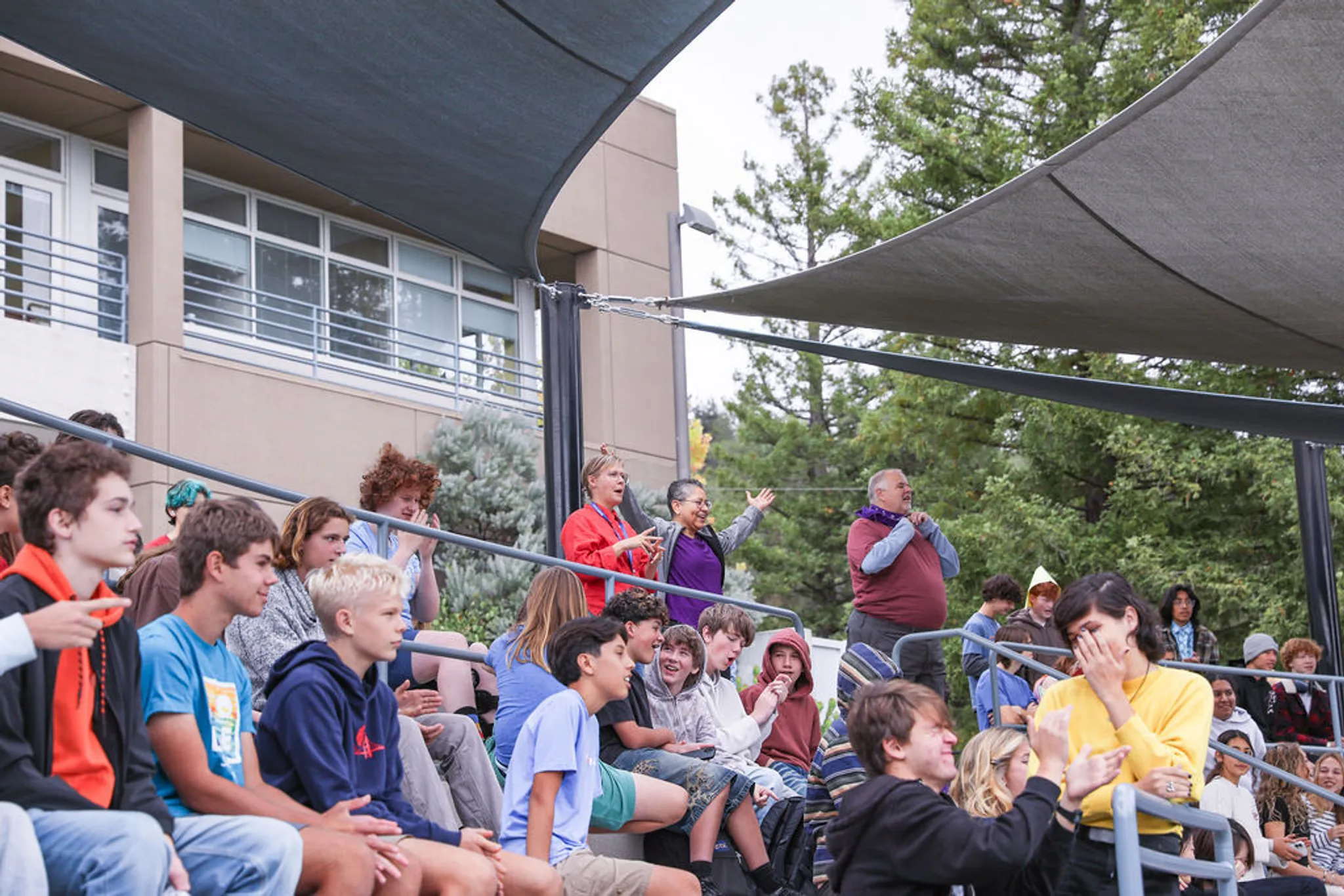
The Kirby Journey, 5–12
The Kirby Journey
One school, from fifth grade through graduation.
The middle and high school years are the primary years when identity is forming, intellectual habits are solidifying, and confidence, or self-doubt, is taking root. These are also the last years in which a child grows within the daily structure of family life and a school environment that can be designed around their development. After this chapter, the world becomes wider and less centered on their growth.
Most schools are organized around what is convenient for the institution: a segmented day, standardized pacing, uniform benchmarks, and a single set of expectations applied to every age. Kirby is organized around what is happening inside the student. What a fifth grader needs from the adults around them is different from what a tenth grader needs, so the school provides the right scaffolding at each stage and takes it away as the student shows they can carry more. The philosophy underneath stays the same the whole way through. Every student is met with unconditional positive regard, rigor means depth, and belonging is treated as the precondition for learning. The shape of the support is what changes.
The arc, in four stages
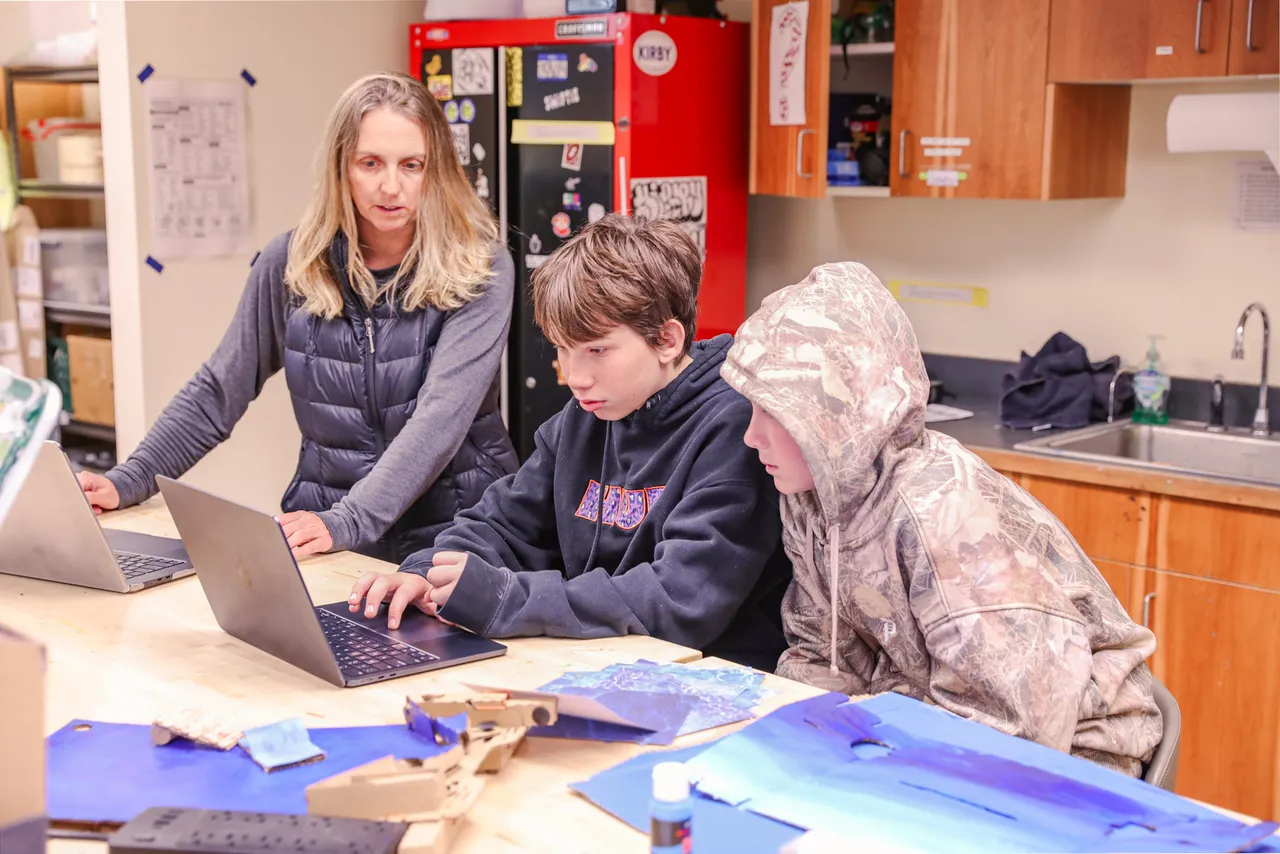
Fifth and sixth grade: a smaller world, on purpose
At ten and eleven, students are beginning to think abstractly and are often ready for more intellectual challenge than a traditional elementary classroom can hold, while still needing the security of a small group, consistent adults, and a day with movement built into it. The 5th and 6th grades at Kirby have their own wing of campus, their own small team of teachers who each cover more than one subject, and their own rhythm to the day, with lunch, recess, and breaks held separately from the older grades. Sixth grade uses pass/fail grading with detailed feedback, so students learn to care about the work before they learn to care about the grade. The scaffolding is close and the expectations are real.
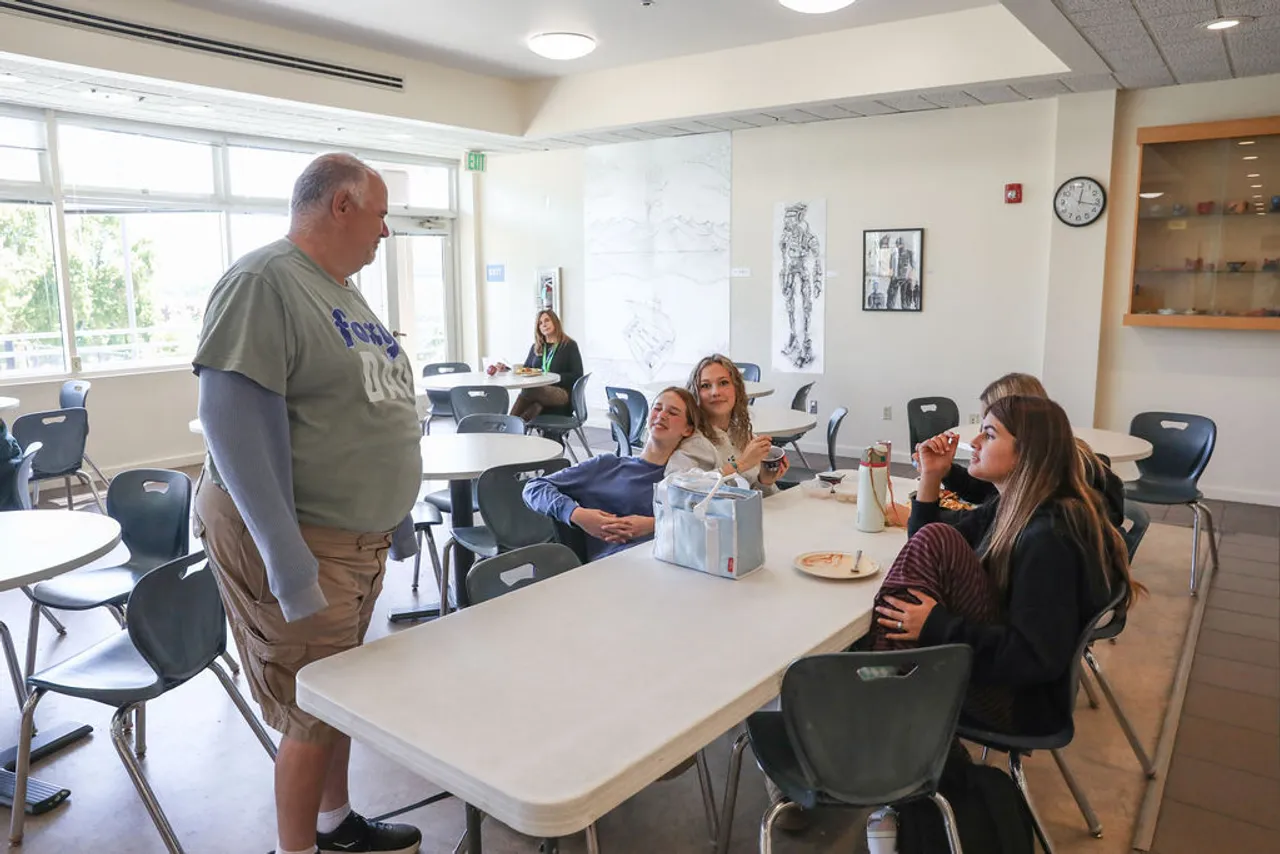
Seventh and eighth grade: the beginning of individuation
Early adolescence is when a young person starts to say, in implicit and explicit ways, "I am not you." This is the work the adolescent brain is designed to do.
Students at this age need to be taken seriously as thinkers, to be given real choices with real consequences, and to be held by adults who treat the push for independence as a signal of readiness.
In the 7th and 8th grades, the scaffolding loosens. Students move between subject teachers, begin a world language, transition to traditional grading, and start to shape their own program, including the option to begin high school arts courses in 8th grade. They are placed in math and science by readiness, so a student who is ready for algebra or high school science takes it, often alongside older students. Leadership roles and advisory give the students' growing need for voice somewhere to go.
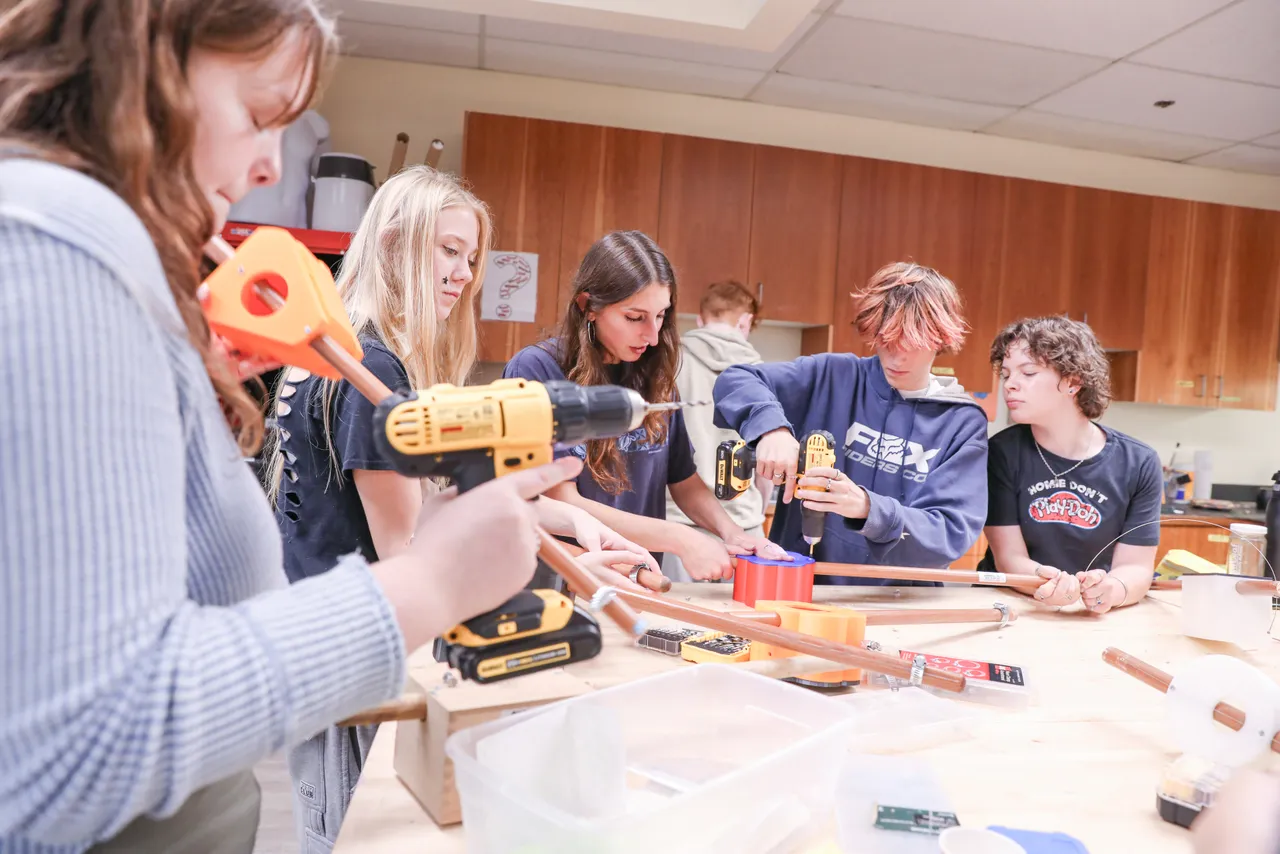
Ninth and tenth grade: room to explore
By high school the drive toward differentiation is in full force, and the most important thing a school can do is make sure that energy goes into curiosity. Kirby meets this stage with range.
Ninth and tenth graders explore broadly across the humanities, sciences, languages, and the arts, and because placement is by readiness, a ninth grader who is, for example, ready for physics can take physics instead of waiting for a typical grade-level based progression. Classes are discussion-rich and students are expected to speak, argue, revise, and risk being wrong in front of each other, which is only possible in a room where their worth doesn't depend on the result. Grade-level retreats and a culture students carry with each other make it safe to try.
Eleventh and twelfth grade: depth, agency, and what comes next
Older adolescents are ready to consolidate: to go deep into the things that have captured their interest, to take ownership of their own learning, and to advocate for themselves.
Eleventh and twelfth graders at Kirby choose from a rotating slate of electives, pursue honors coursework held to our own standards, and can take on an Intensive Path in STEM, the humanities, languages, or the arts, combining advanced study with independent work and close faculty mentorship.
College counseling at this stage is about self-discovery as much as outcomes, helping students identify what matters to them and chart a path that fits who they are becoming.
Students graduate from Kirby with a sense of self, the ability to speak for themselves, a real understanding of how they learn, and the habits of mind that come from learning pursued for its own sake.
What never changes
Across every stage, three things remain consistent.
Students are met with unconditional positive regard by faculty who are trained in it and practice it deliberately, which means a student's worth is never contingent on the grade, the behavior, or the bad week.
Rigor means depth and is calibrated to the student rather than the grade level, so no one is held back by their age or pushed past what they are ready for.
And belonging is treated as the precondition for learning, because when a school meets adolescence with acceptance instead of control, the energy a student would otherwise spend guarding or proving themselves goes into their work, their friendships, and their curiosity.
Entering along the way
Students join Kirby at every grade, and the structure is built for that. Sixth and ninth grade are the largest entry points, and students arrive from public schools, other independent schools, and homeschool. Because the school is small and placement is by readiness, a new student is placed deliberately and known quickly, whichever stage they arrive at.
Kirby School is an independent and private, college-preparatory 5–12 school in Santa Cruz where curious students are known deeply, challenged wisely, and grow into themselves.

Accredited by the California Association of Independent Schools (CAIS) and the Western Association of Schools and Colleges (WASC). Member of the National Association of Independent Schools (NAIS). Kirby School does not discriminate against any person on the basis of race, color, sex, religion, sexual orientation, physical disability or national origin.