
Why Kirby
Our Philosophy
Challenged and cherished.
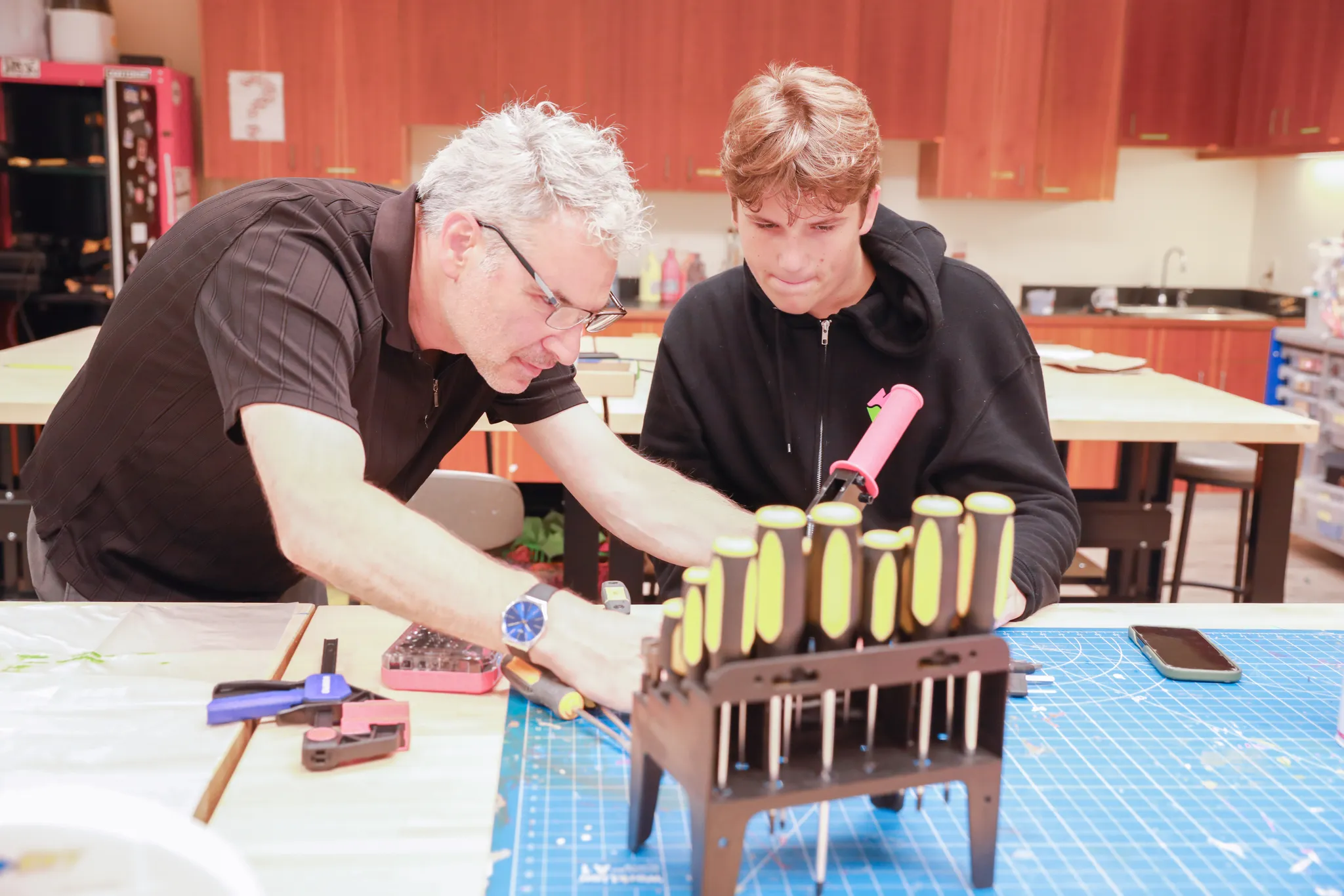
Kirby is an intentionally small, courageously different middle and high school in Santa Cruz for intellectually curious students who don't fit easily into boxes, and who wouldn't want to. Here, students are challenged without being hardened, supported without being coddled, and known not just by name, but by heart. We believe academic rigor and emotional belonging are the twin pillars of a truly transformative education. Learning at Kirby is personal, purposeful, and profoundly human. Students grow not by performing, but by becoming: more thoughtful, more capable, and more wholly themselves.
Rigor and belonging, by design
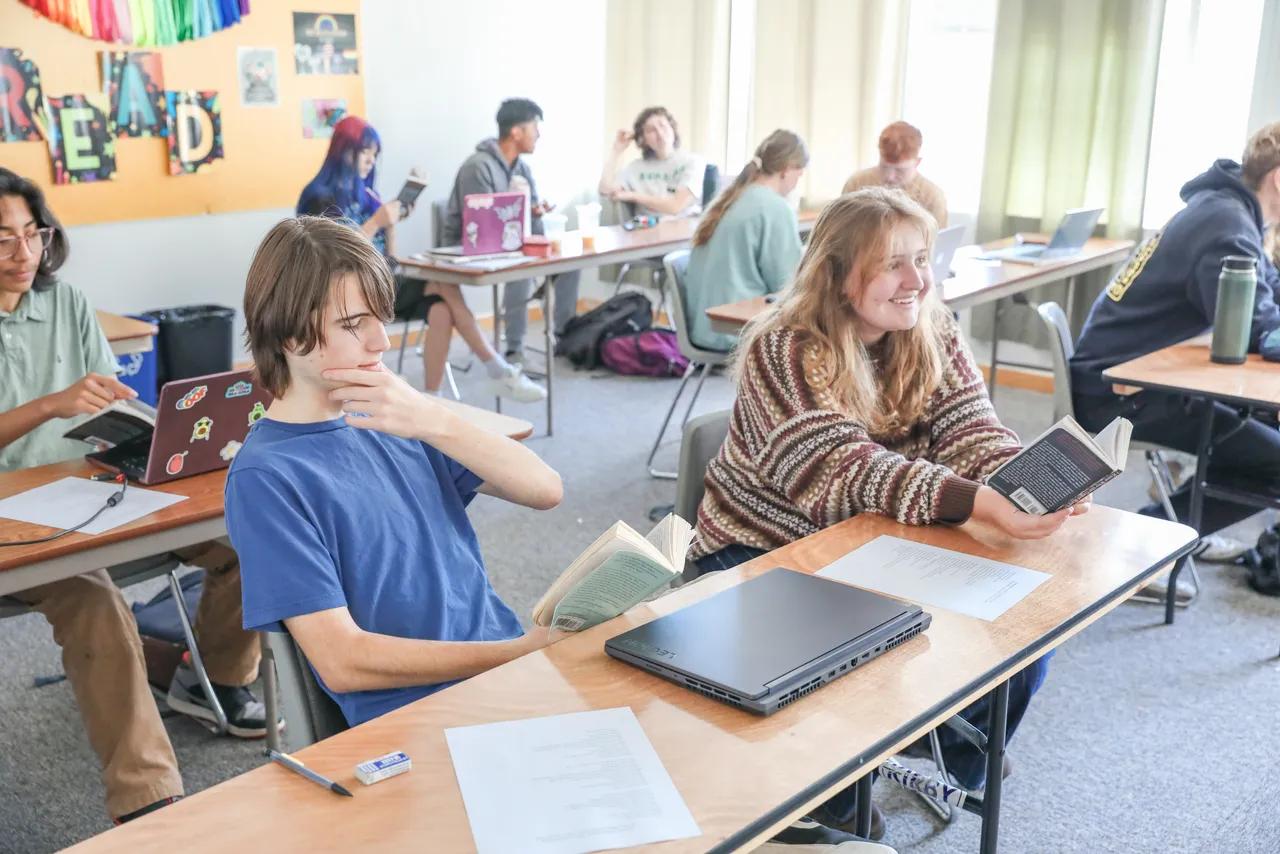
Many schools treat academic challenge and emotional safety as a trade-off, as though a school can only push students by asking them to armor up, or only care for them by asking less of them. We have proven that the opposite is true–and research supports this. Students take real intellectual risks when they know their worth doesn't depend on the result, and that is the condition under which serious learning happens. Everything about Kirby follows from this: our size, the way students are placed in classes, how our faculty are trained, and a culture that the students themselves co-create.
The practice underneath
Unconditional positive regard
The practice underneath all of it has a name: unconditional positive regard. It's the conviction that every student is capable and worthy before they have earned a grade. This practice is just as true on the hard days as the good ones. Our faculty are trained in it and practice it deliberately. Students don't study it as a subject; they experience it as the environment they learn in, and it changes what they are willing to try.
Known and seen
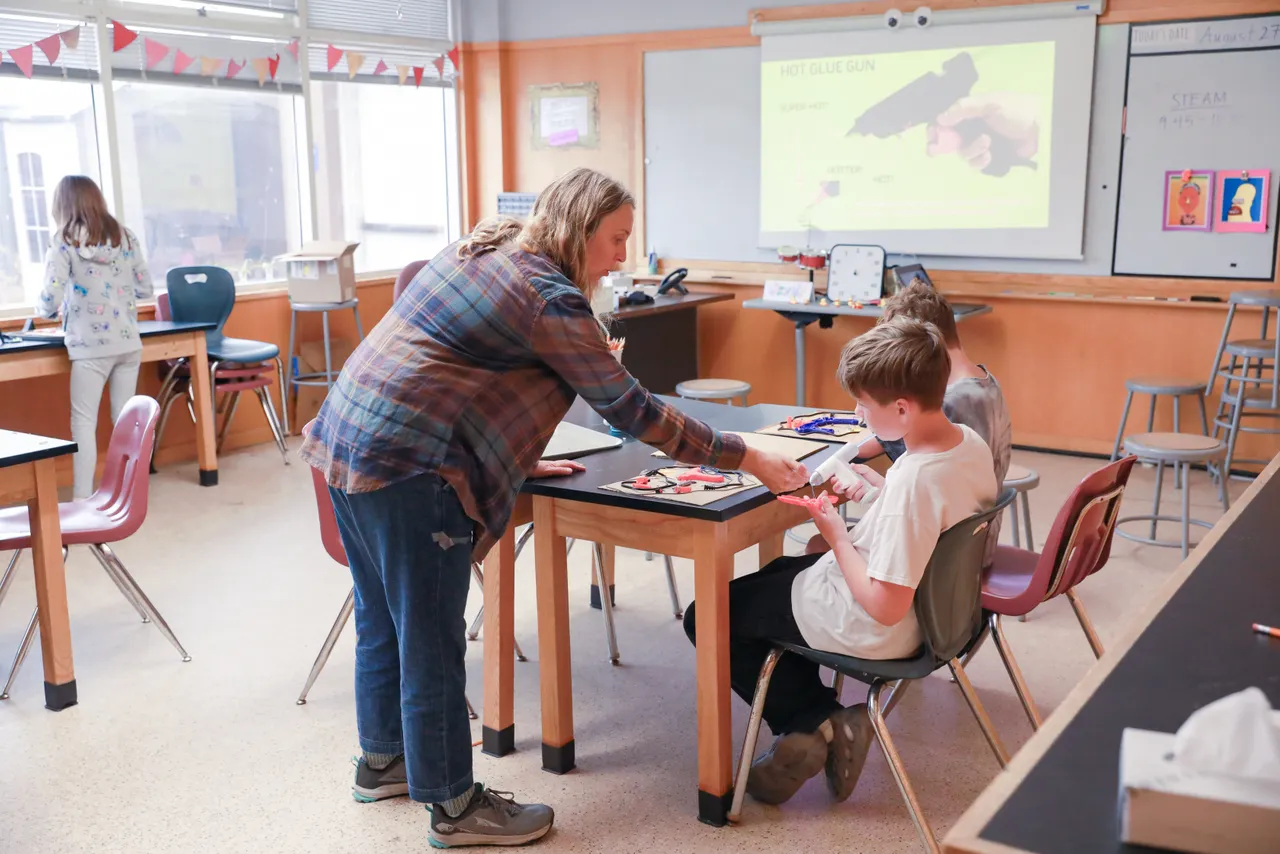
Every student is known here, and that’s a deliberate practice. In a school this size, teachers know each our students by name, of course, but also know them for how they think: where they get stuck, what they light up about, and what it looks like when they are having a hard day. Advisory, tutorial periods, and office hours are built into the schedule so that this knowing is sustained rather than left to chance, and because many teachers work with the same students across several years, that understanding deepens over time.
When a kid is known, treated with respect, and met with curiosity when they’re struggling, they are safe enough to take the risks that learning requires, like trying to work out a solution before they know how, being vulnerable, and trying new things. They stop spending energy on managing how they appear and start spending it on the work in front of them. That’s what makes deep learning possible.
Rigor means depth
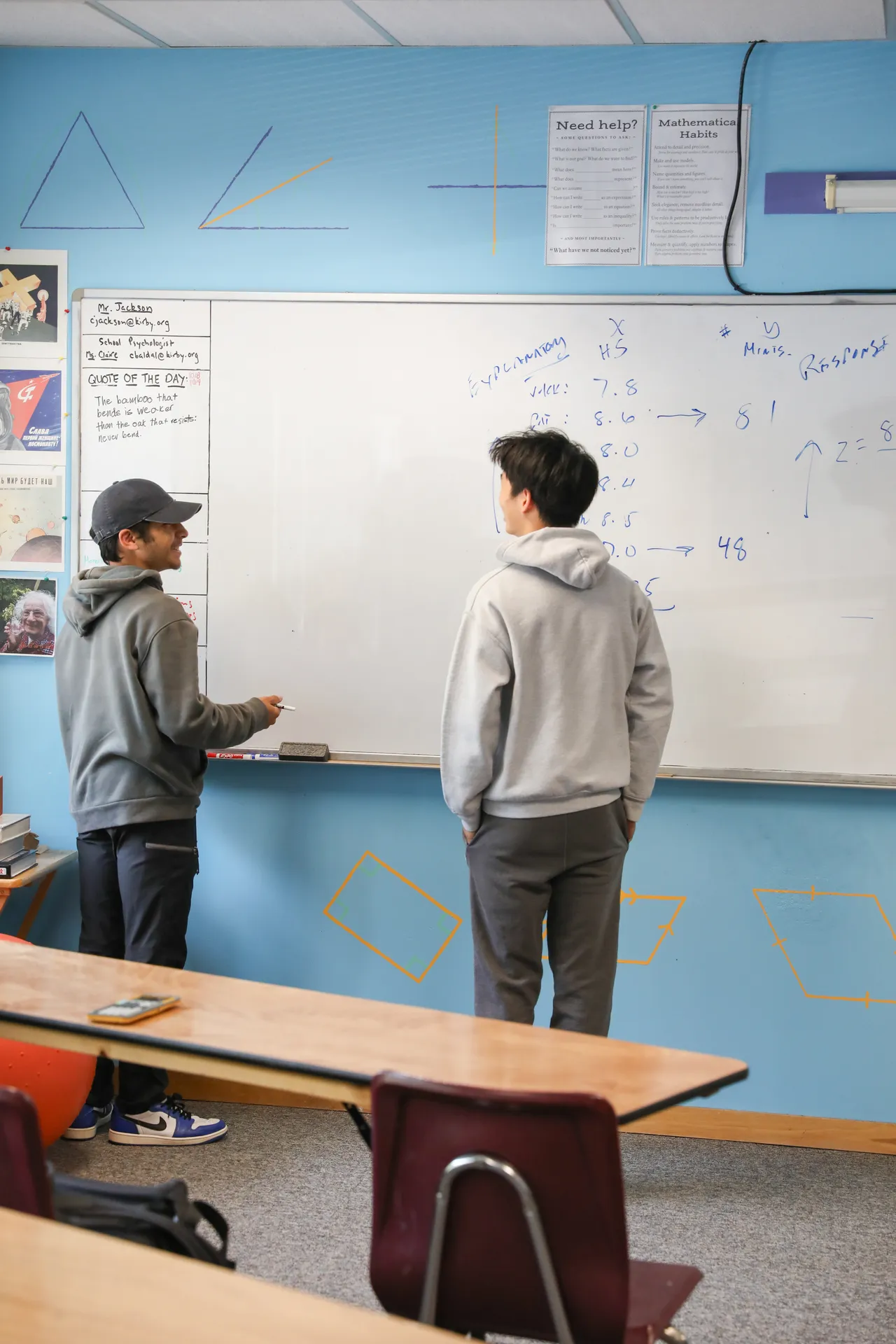
Rigor here means depth, and it's calibrated to the student rather than the grade level. Placement in math and science is by readiness, so a 9th grader who is ready for physics takes physics and a senior can reach multivariable calculus.
We stepped away from AP courses so that advanced work is held to our own standards rather than an exam's pacing; students can still sit for AP exams, and our honors courses go deeper than the AP curricula. We don't teach to the test.
Learning here is about mastery, and students can go as far and as wide as they are able. Last year 98% of students reported feeling appropriately challenged and 99% felt supported by their teachers, and though we are intentionally small, the curriculum stays broad, Latin and Ancient Greek to History, Literature, and Art of Indigenous US to Marine Biology, Digital Music Production, Engineering & Design Thinking, and so much more.
Belonging is real
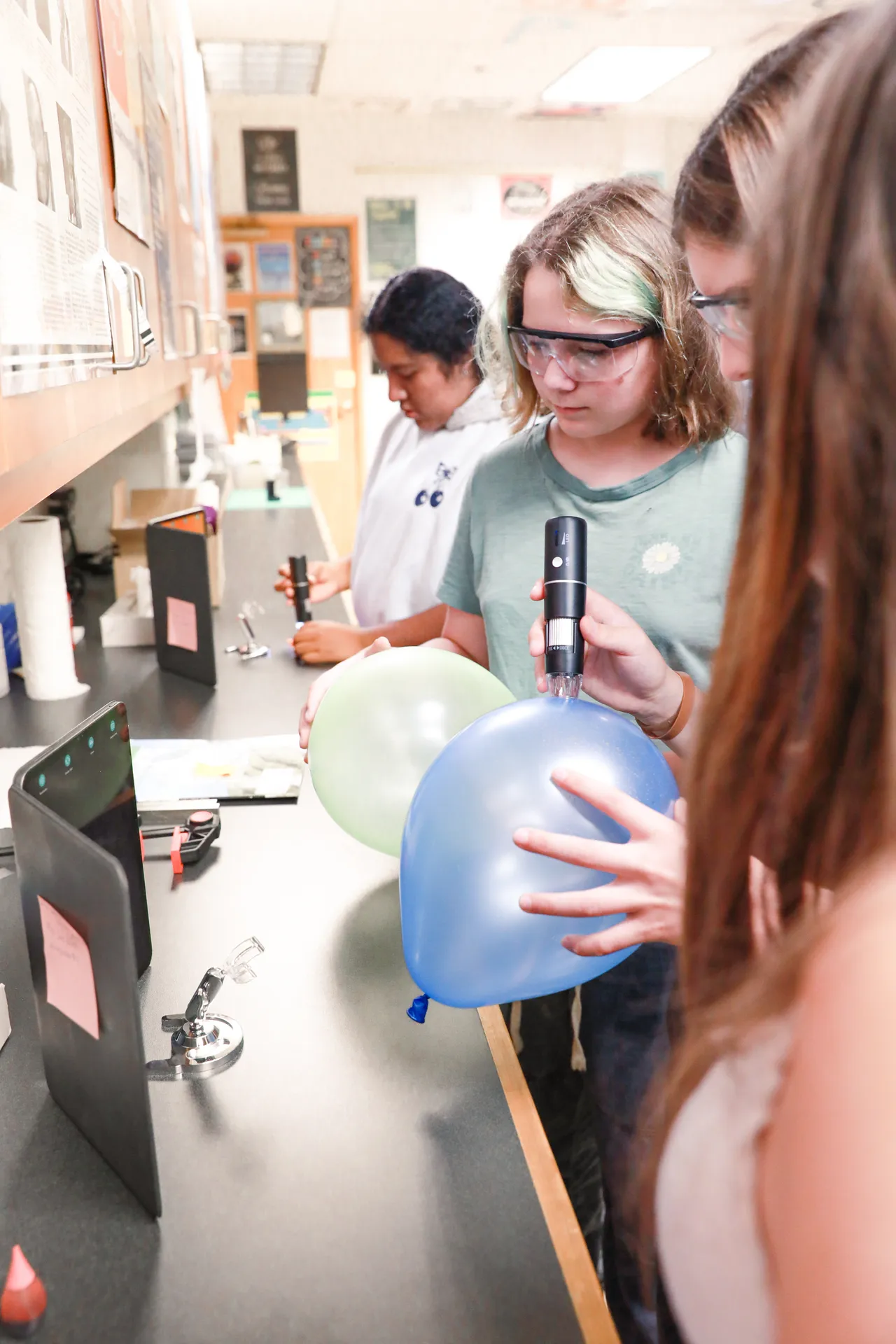
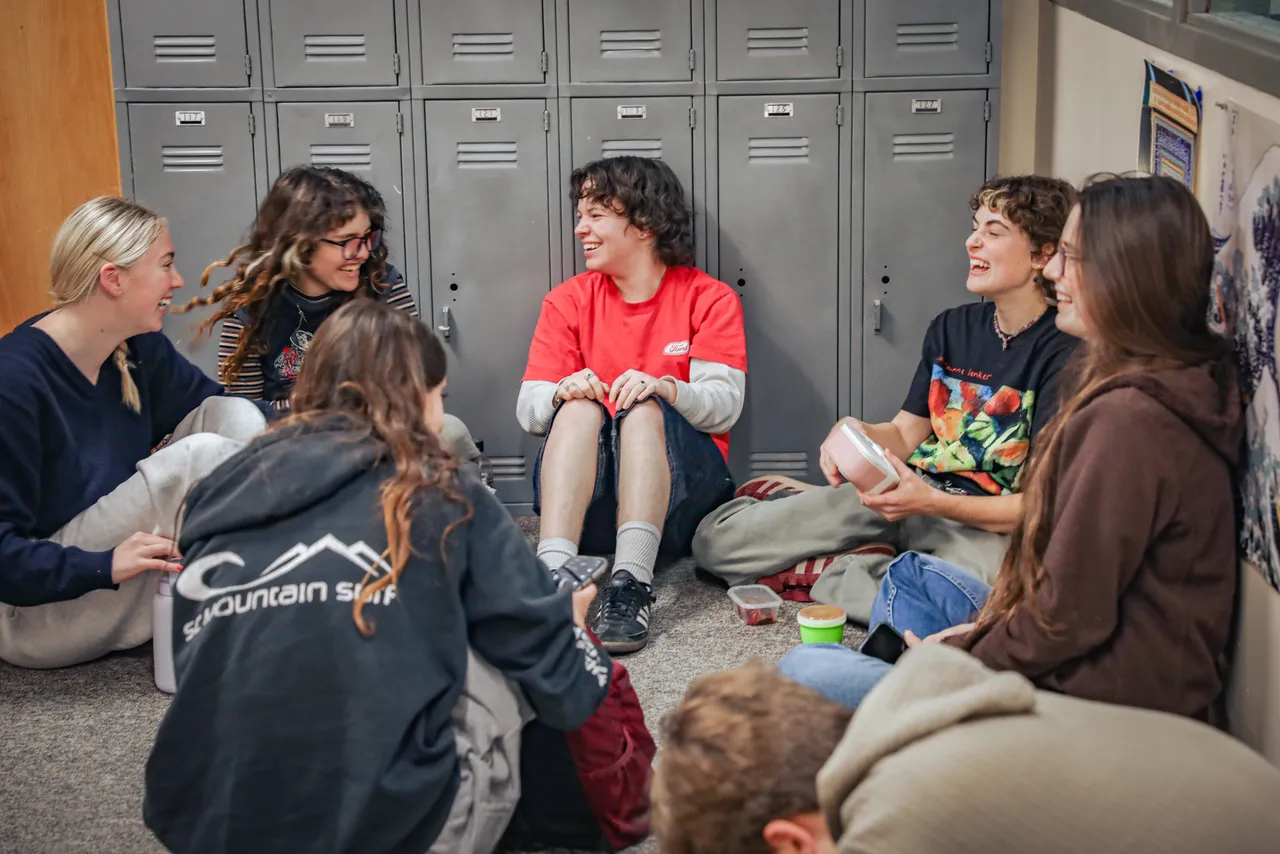
Belonging is real here, and students feel a sense of agency and ownership over this place. They are accepted for who they are while being challenged so they can grow, and the culture that makes that possible is one the students create and maintain with each other. We don't ask kids to fit a mold or hide the parts of themselves that didn't fit somewhere else.
Many schools accept it as normal that teenagers will be unkind to each other; we don't find that to be true. When a school meets adolescence with acceptance instead of control, the energy a student would otherwise spend guarding or proving themselves goes into their work, their friendships, and their curiosity.
That's why we treat belonging as a precondition for learning.
Becoming
A kid educated this way is free to focus on becoming who they are, because they aren't spending their adolescence performing or protecting themselves. Our graduates are ready for college and go on to a wide range of schools, and they leave with more than a transcript.
They leave with a sense of self, the ability to advocate for themselves, a real understanding of how they learn, and the habits of mind that come from learning pursued for its own sake: curiosity, the willingness to sit with a hard question, and the confidence to keep going when something is difficult.
At Kirby, students don't just grow, they grow into themselves.
Explore this section
More about Why Kirby
Kirby School is an independent and private, college-preparatory 5–12 school in Santa Cruz where curious students are known deeply, challenged wisely, and grow into themselves.

Accredited by the California Association of Independent Schools (CAIS) and the Western Association of Schools and Colleges (WASC). Member of the National Association of Independent Schools (NAIS). Kirby School does not discriminate against any person on the basis of race, color, sex, religion, sexual orientation, physical disability or national origin.