
Middle School
Middle School, grades 5–8
This is where momentum begins.
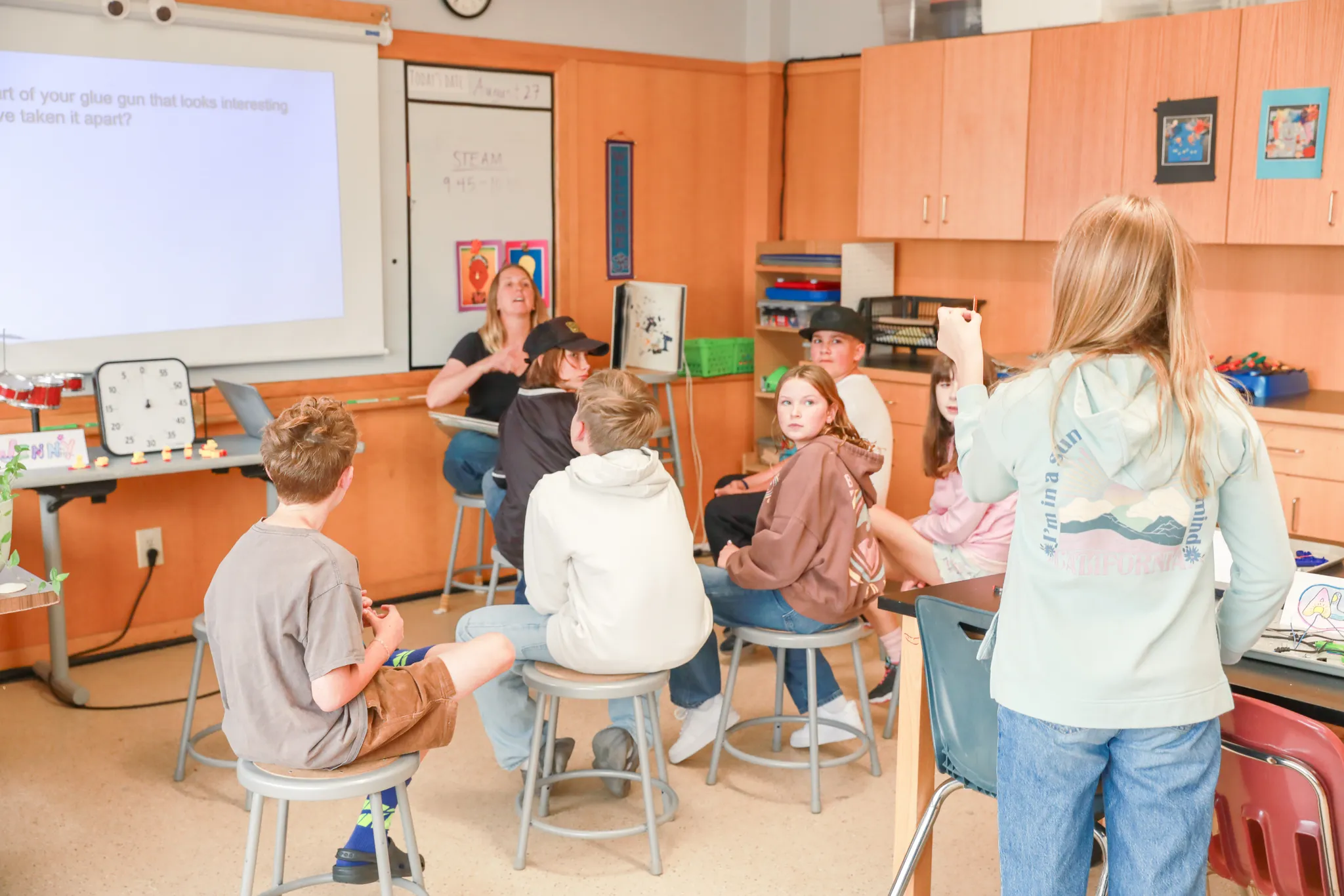
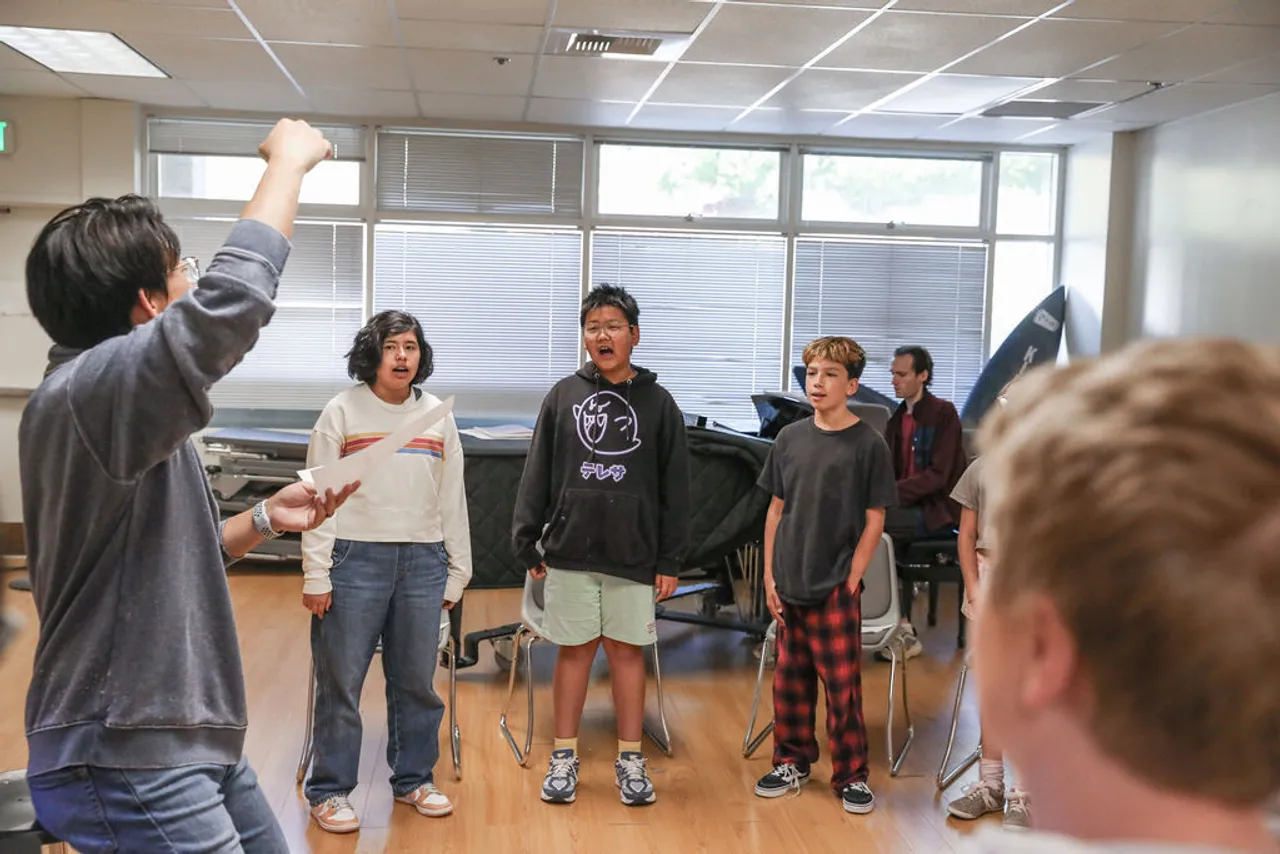
At Kirby, middle school students dive deep into literature, lab work, ethics, identity, and creativity. They're met with challenge and care, and invited to stretch intellectually while staying grounded emotionally. Our intentionally small school means no one gets lost, and everyone is seen. By the time they enter high school, Kirby middle schoolers are confident, curious, and ready to lead.
Built for the age they are
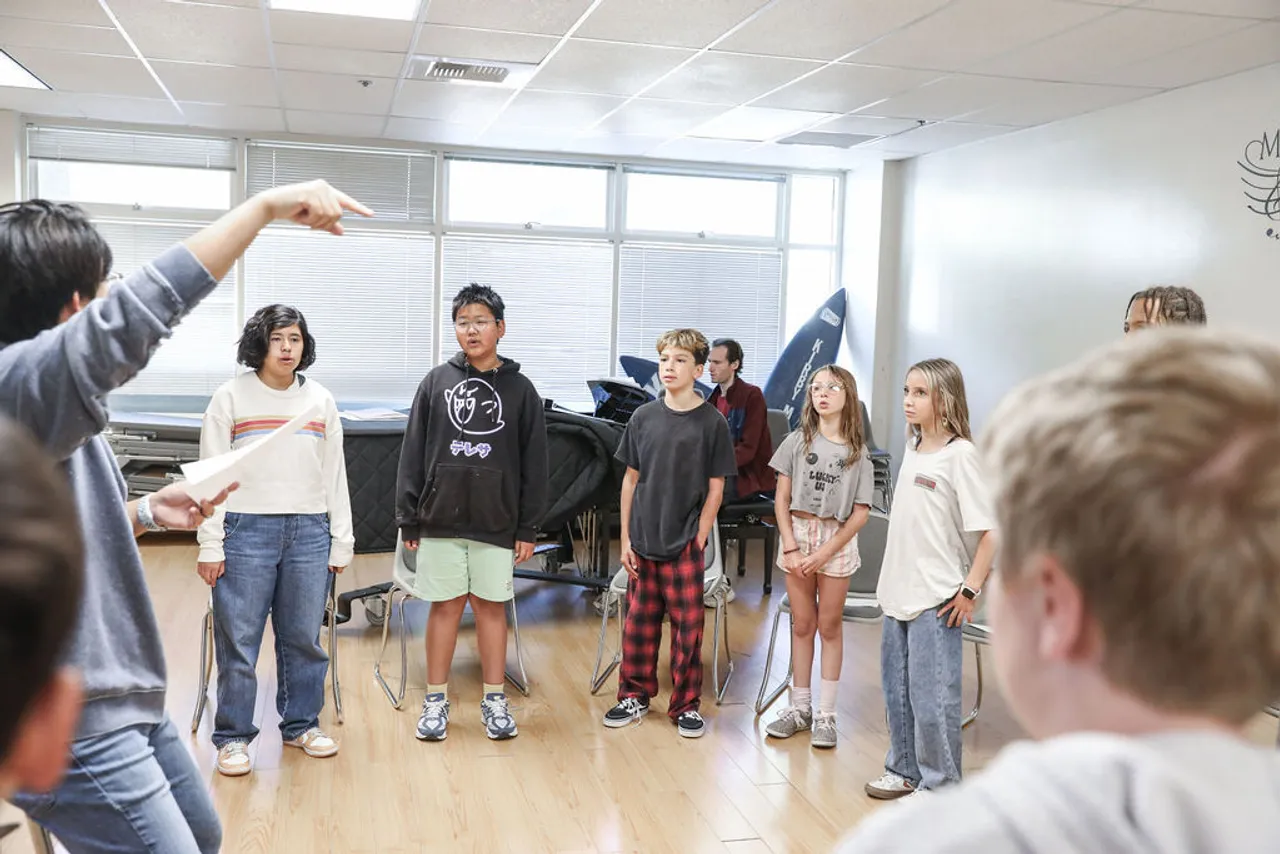
Our middle school treats 5th and 6th grade differently from 7th and 8th on purpose. A 5th grader and an 8th grader aren't navigating the same developmental terrain, so each has its own rhythm, its own level of scaffolding, and its own set of expectations. Across all four grades, placement in math and science is by readiness rather than age, so a student who is ready for more can take it and a student who needs more time in one subject gets it, often alongside students from the grade above or below.
For 5th and 6th graders, that means their own dedicated wing of campus, with their own classrooms, their own bathroom, and their own corner of the building. These students share a small team of teachers who each cover more than one subject, rather than the six or seven different teachers a student might see in the upper grades, and who know every student in both grades. Lunch, recess, and breaks are held separately from the rest of the school, with more frequent movement built into the day. Fifth and sixth graders learn alongside one another for much of the day, which keeps the group large enough to be lively and lets the teaching team group students by where they are rather than by birthday.
For 7th and 8th graders, the scaffolding loosens as students show they can carry more. They move between subject teachers, begin a world language, transition from the pass/fail grading of 6th grade to traditional grades, and start making real choices about their own program, including the option to begin high school arts courses in 8th grade. Leadership roles and advisory prepare them for the greater independence of high school.
What they learn
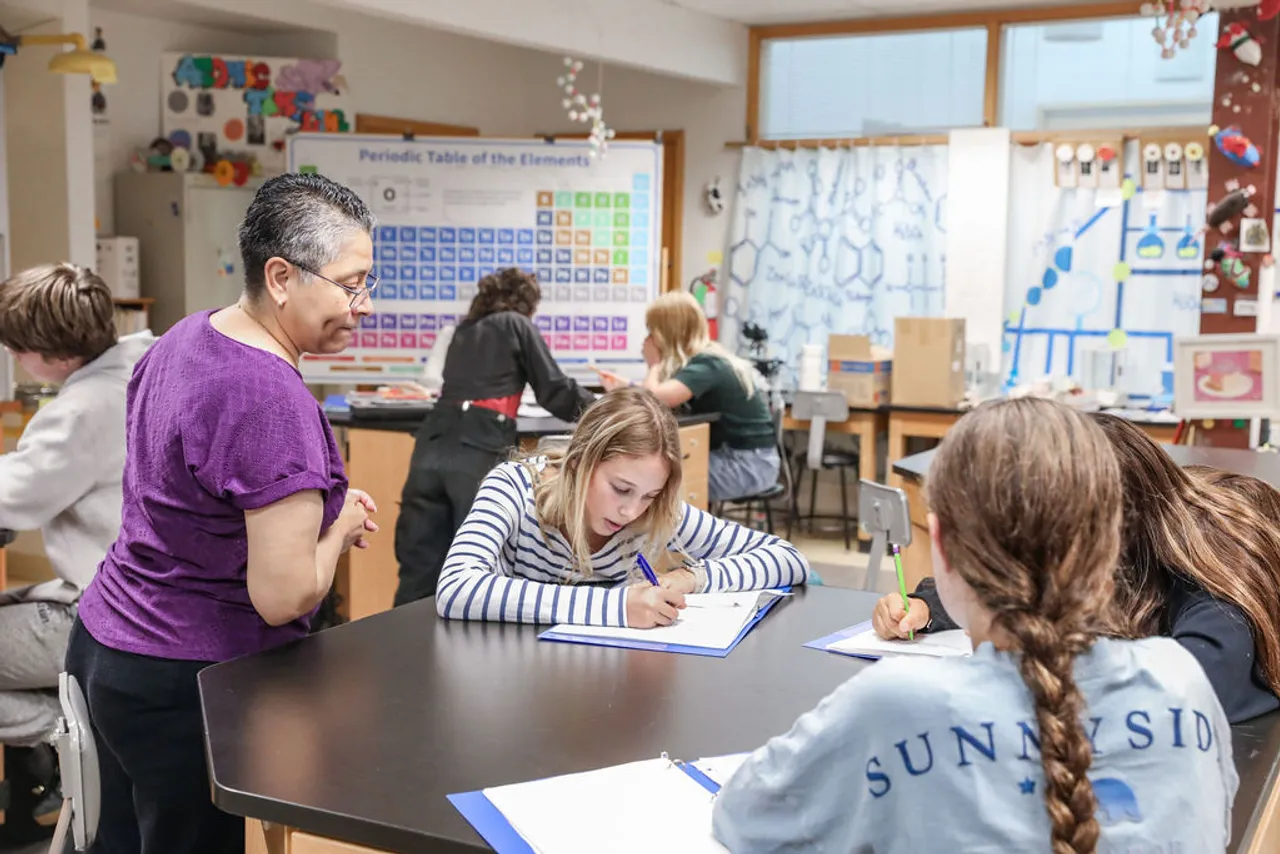
Placement in math and science is based on readiness rather than grade level, so students advance into algebra, geometry, or high school science as soon as they are ready, and many classes mix grade levels. Science moves from hands-on, foundational work in earth, life, and physical science toward the biology, chemistry, and physics sequence of high school, with an emphasis on designing investigations, testing hypotheses, and presenting findings.
Humanities courses ground students in reading, writing, and analysis. Students learn to construct arguments, interpret sources, and present ideas with clarity and confidence, and discussion asks them to prepare and to be precise. By eighth grade they are writing sustained essays and practicing the habits of inquiry they'll carry into high school.
World language begins in 7th grade with a choice of Spanish, Latin, or American Sign Language, placed by readiness like math and science, so that students who start early can reach advanced and honors levels by graduation. Every middle schooler rotates through art, theater, and music, and takes part in SELPH, our social-emotional learning and physical health program, which builds self-awareness, resilience, and executive functioning alongside physical activity and teamwork. Study skills, from organization and note-taking to planning and test strategies, are taught inside every subject rather than as a separate class.
Beyond the classroom
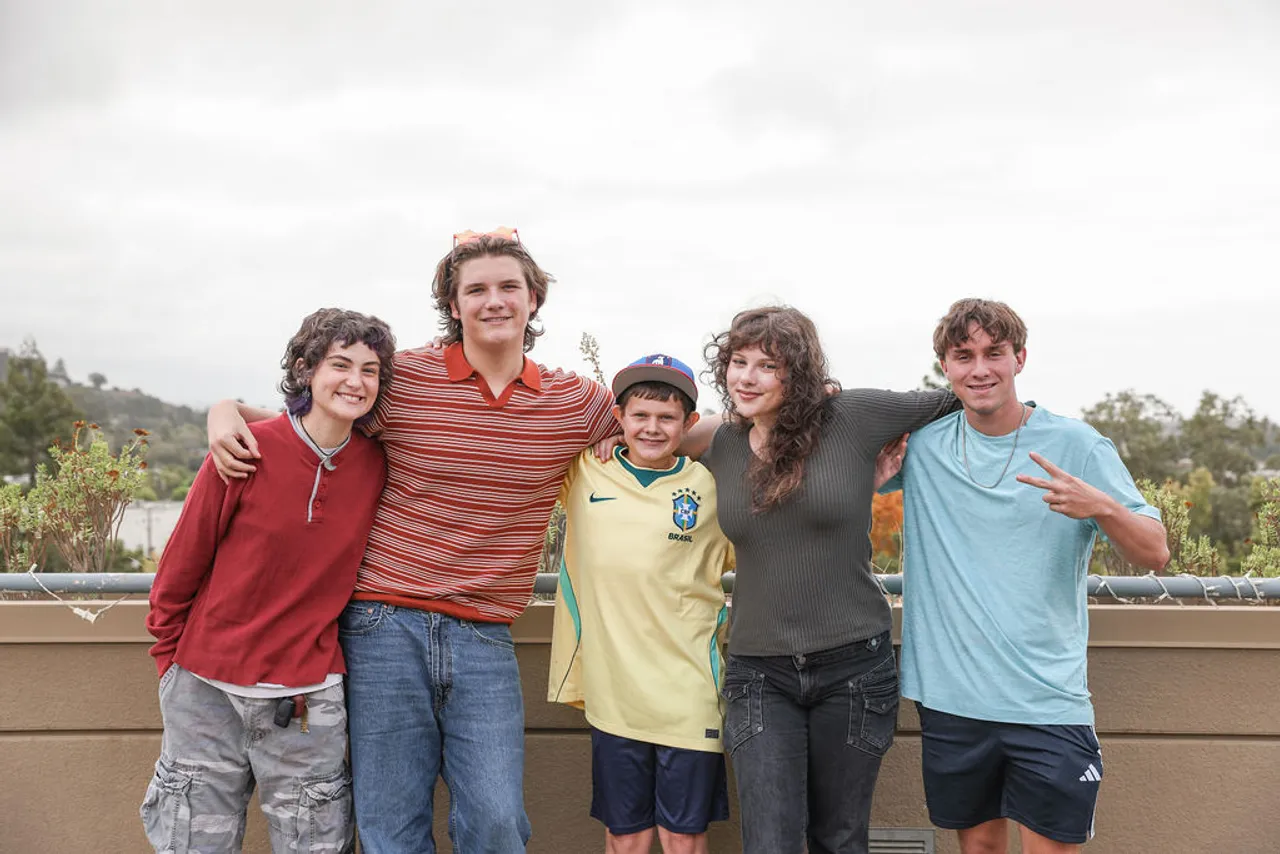
Each year of middle school includes an annual grade-level retreat that builds friendships, confidence, and leadership, along with clubs, athletics, and the arts that bring what happens in class into the rest of the day.
Because many classes mix grade levels, middle schoolers work alongside older students; younger students are drawn along by older peers' focus, and high schoolers grow through modeling and mentorship.
Every Wednesday the whole school gathers for Griffin Gathering, a half hour run by the Student Council Cabinet that is equal parts announcements, reflection, games, and school spirit.
Fifth grade, opening 2027–28
Our 5th grade, launching in 2027–28, is designed for students whose pace of cognitive development has begun to outstrip what a traditional 5th grade classroom can offer, and who are ready to be met by teachers who already know how to teach at that edge. Fifth graders will join the 5th/6th band, with the campus wing the teaching team, and the rhythm of the day built around them.
Come find out how good middle school can be
The best way to understand Kirby is to spend a morning here. A shadow day lets your student spend a real day in real classes while you join us for coffee, and it is the visit that tends to settle things for families. Open houses and neighborhood parent gatherings are good first steps as well.
Kirby School is an independent and private, college-preparatory 5–12 school in Santa Cruz where curious students are known deeply, challenged wisely, and grow into themselves.

Accredited by the California Association of Independent Schools (CAIS) and the Western Association of Schools and Colleges (WASC). Member of the National Association of Independent Schools (NAIS). Kirby School does not discriminate against any person on the basis of race, color, sex, religion, sexual orientation, physical disability or national origin.