
What Is This Assignment For? How Kirby Thinks About AI

By Christy Hutton, Head of School
Last spring I wrote about artificial intelligence and what it means to educate human beings in a world where machines can do more and more of what we once considered purely human work. That piece was about the big picture. This one is about what AI looks like in our classrooms.
Many schools are approaching AI mainly as a question of rules: how to prevent cheating, which tools to allow, and when. I understand why families want answers to those questions. At Kirby, we start with a different question. Our teachers ask what the assignment is for. What are we trying to measure, and what matters most in this moment of learning? I wouldn't want a student using spell check during a spelling test. If that same student is polishing a poster meant to communicate something important, I want them to use spell check. The tool is the same in both cases. What changes is the purpose of the work.
That's also why you won't find a long list of AI rules from us. AI use looks different in every grade, subject, and classroom, and the technology is changing too quickly for particulars written today to hold true tomorrow. We would rather stay true to a clear philosophy, and trust our teachers to apply it thoughtfully, than become rigid about details that will keep shifting.
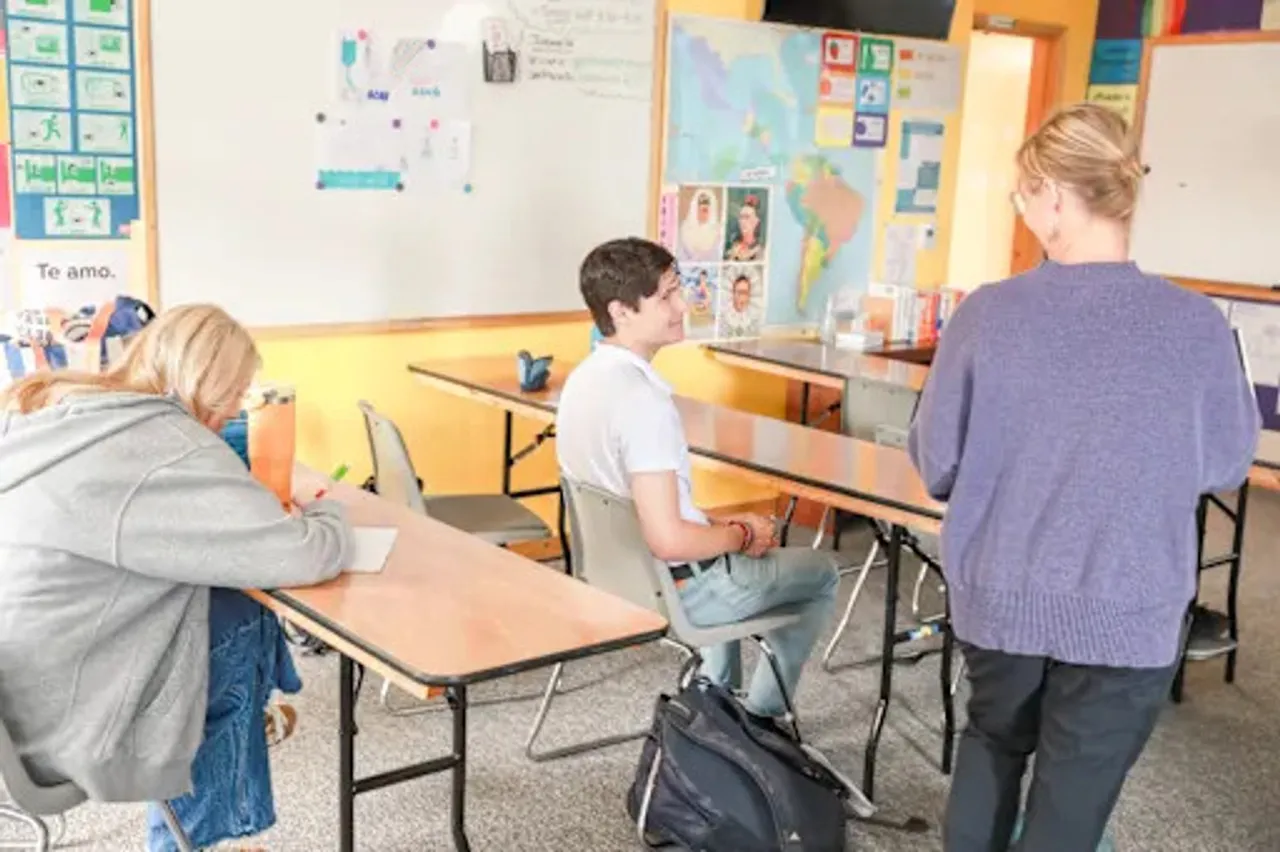
AI unsettles education's focus on the finished product, and that focus was already a problem. A polished final paper tells you that something got done. It doesn't tell you what happened along the way. Long before AI, there were ways to make a final product look impressive, whether a $200-an-hour tutor or a parent who loves writing high school essays. Kirby has always paid close attention to the process instead. In English and history, drafts carry a meaningful share of the grade, because developing ideas and grappling with them is where the learning happens. Students lead seminars, deliver Shakespearean declamations, perform skits, and present their work and answer questions about it. Collaborative work shows us where a student is stuck, because students often feel safer admitting confusion to a peer. In art, grades reflect a student's approach, resilience, and response to feedback, and have nothing to do with whether they are a brilliant artist. When students regularly explain their reasoning and defend their thinking out loud, we can see how they got where they are. In that kind of classroom, AI is much less of a worry.
Our students also turn out to be strong users of AI. They are used to critique, feedback, debate, and clear communication, and AI gives useful feedback when you know how to communicate what you need. Teachers watch for moments when AI removes a barrier that used to put a goal out of reach. In one design thinking class, students are building robots with sensors to create products no one has thought of before, and their teacher encourages them to use AI to write the code for the sensors. The class is about what they design, and AI means coding no longer has to be a prerequisite or a barrier to their creativity and innovation. This fits with what I wrote last year about learning to think before automating thinking. When the thinking is the point of the assignment, students do it themselves. When a separate skill would stand in the way of the real goal, AI can help them get there.
The World Economic Forum's 2025 Future of Jobs Report found that employers expect nearly 40% of workers' core skills to change by 2030. Alongside technical skills, the capacities rising fastest include creative thinking, resilience, curiosity, and lifelong learning. Ten years ago, families sometimes passed on Kirby because we didn't teach Chinese or put coding at the center of our curriculum. Today my AirPods can translate Mandarin into my ear while someone is speaking, and coding is one of the fields AI is changing most. What remains depends on people: thinking creatively, staying curious, recovering from failure, and communicating and collaborating well.
Those skills are cultivated every day at Kirby, in every grade and subject. They grow when students feel safe enough to share an idea before it's polished, to stumble in front of their classmates, and to try something new. That safety, rooted in unconditional positive regard, has always been at the heart of how we teach, and it prepares our students for a future none of us can fully picture yet.
Kirby School is an independent and private, college-preparatory 5–12 school in Santa Cruz where curious students are known deeply, challenged wisely, and grow into themselves.
Accredited by the California Association of Independent Schools (CAIS) and the Western Association of Schools and Colleges (WASC). Member of the National Association of Independent Schools (NAIS). Kirby School does not discriminate against any person on the basis of race, color, sex, religion, sexual orientation, physical disability or national origin.